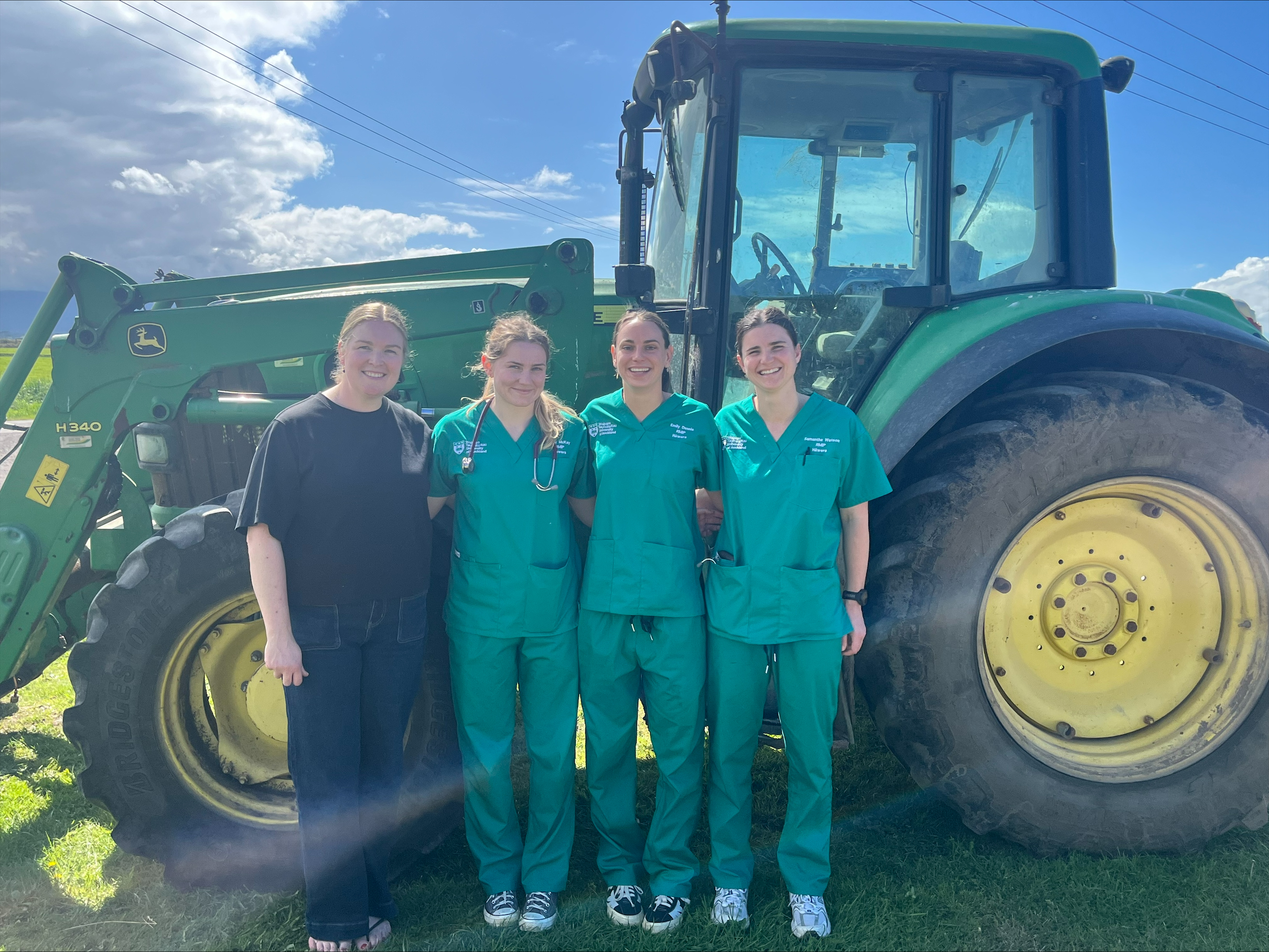
Growing the future of rural healthcare
16 November 2026This year’s Rural Medical Immersion Programme (RMIP) students have finished their placement year in South Taranaki. All three are staying in the region and are seriously considering rural medicine.
A collaboration between the University of Auckland and Health New Zealand, with support from Taranaki Foundation, Toi Foundation and other donors, the programme gives medical students first-hand experience of rural healthcare while helping build the future rural workforce.
When Sam Watson, Emily Dennis and Lucy McKay arrived in South Taranaki in January, they were three medical students about to spend a year in a rural hospital. By early October, they had learnt to milk cows, summited the maunga, joined the local sports and pub quiz teams, and become part of the Hāwera community.
All three have chosen Taranaki Base Hospital for their next placement year.
During their year at Hāwera Hospital, they gained additional hands-on experience in local general practices, St John and iwi health services.
Sam says being part of smaller rural teams meant more one-on-one teaching and increasing responsibility.
“Our time in Hāwera as part of RMIP was valuable. The teams were smaller, you had more one-on-one time and as the year progressed you were trusted with more responsibility. That has given me the confidence to go into my final year of medical school.”
Emily says the students were hands-on from the start, from farm visits to emergency simulations, and credits Hāwera Hospital consultant Dr Hannah Lawn as an inspiring clinician. She leaves with “a solid foundation of knowledge, practical skills and communication tools”.
Lucy also valued the greater hands-on experience and learning from clinicians passionate about their mahi.
The students saw the challenges of rural healthcare first-hand.
Sam, who grew up in central Auckland, says experiencing the barriers rural patients face brought health inequities to life. .
“It’s one thing knowing there is a distribution issue with healthcare in New Zealand, and another to experience the inequities faced in rural health.” she says. She saw the challenges patients face to get to appointments, and farmers worrying about who would help on the farm while they were in hospital.
They also saw what makes rural practice work.
Emily was impressed by staff adapting to whatever came through the door.
“No two days are ever the same,” Emily says.
Outside the hospital, the students were welcomed onto marae, farms and into community activities.
Emily says her gym crew, hockey team, hospital pub quiz team and women’s squash group made Hāwera feel like home.
Patients made just as much difference.
“What has really stood out to me throughout the year is the generosity of the patients we’ve met,” says Emily, acknowledging those who gave their time and trust so students could learn and practise new skills.
Before this year, Sam didn’t know you could specialise in rural medicine. Would she consider it now? “100%.”
Lucy started the year interested but unsure and is now “almost certain” rural medicine is in her future. Emily says she has valued “the variety of rural practice, the close connections with patients and the opportunity to be part of a community.”
Dr Lawn, who went through the programme herself, says the students embraced every opportunity.
“This year’s students hit the ground running. They’ve been enthusiastic from day one and embraced every opportunity. As their supervisor, it’s been a real pleasure to share what makes rural medicine special and see them take that enthusiasm into the next stage of their training.”
For the second year running, Taranaki Foundation, in partnership with Toi Foundation and other supporters, provided the students a fully furnished home rent-free during their placement.
“Having accommodation sorted has made a real difference to the students’ rural hospital training experience. They don’t have to worry about finding somewhere suitable to live, allowing them to focus on their training and study, while building connections and supporting one another during their time at Hāwera Hospital,” says Taranaki Foundation CE Josh Hickford.
“Investing in the people who will care for our communities is an investment in Taranaki’s future. These students have given a lot to South Taranaki this year, and we’re pleased to have played a part in supporting their journey.”
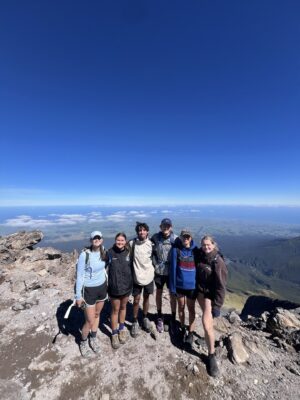
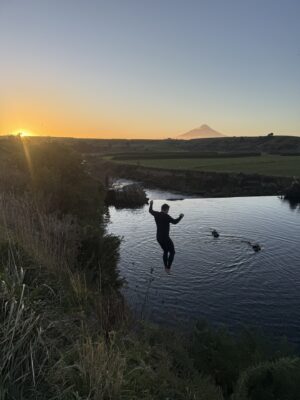
Sam, Emily and Lucy enjoyed their time in South Taranaki. As seen here taking in the views from the top of Maunga Taranaki and giving dam dropping a go!