
More Than Kai. A Community That Shows Up.
18 June 2026Recently a few of us from Taranaki Foundation spent a Wednesday morning at the Waitara Food Bank, helping where we could and getting a real sense of their mahi from the inside.
—————————————————————————————————————————————————————–
There is a particular kind of energy in a place that knows exactly what it is and why it exists. We felt it the moment we walked through the doors. Before we had even taken our coats off, something was already happening. Volunteers at their stations, boxes being assembled, re-stocking of the food shelves, kettle on, laughter cutting through the kitchen.
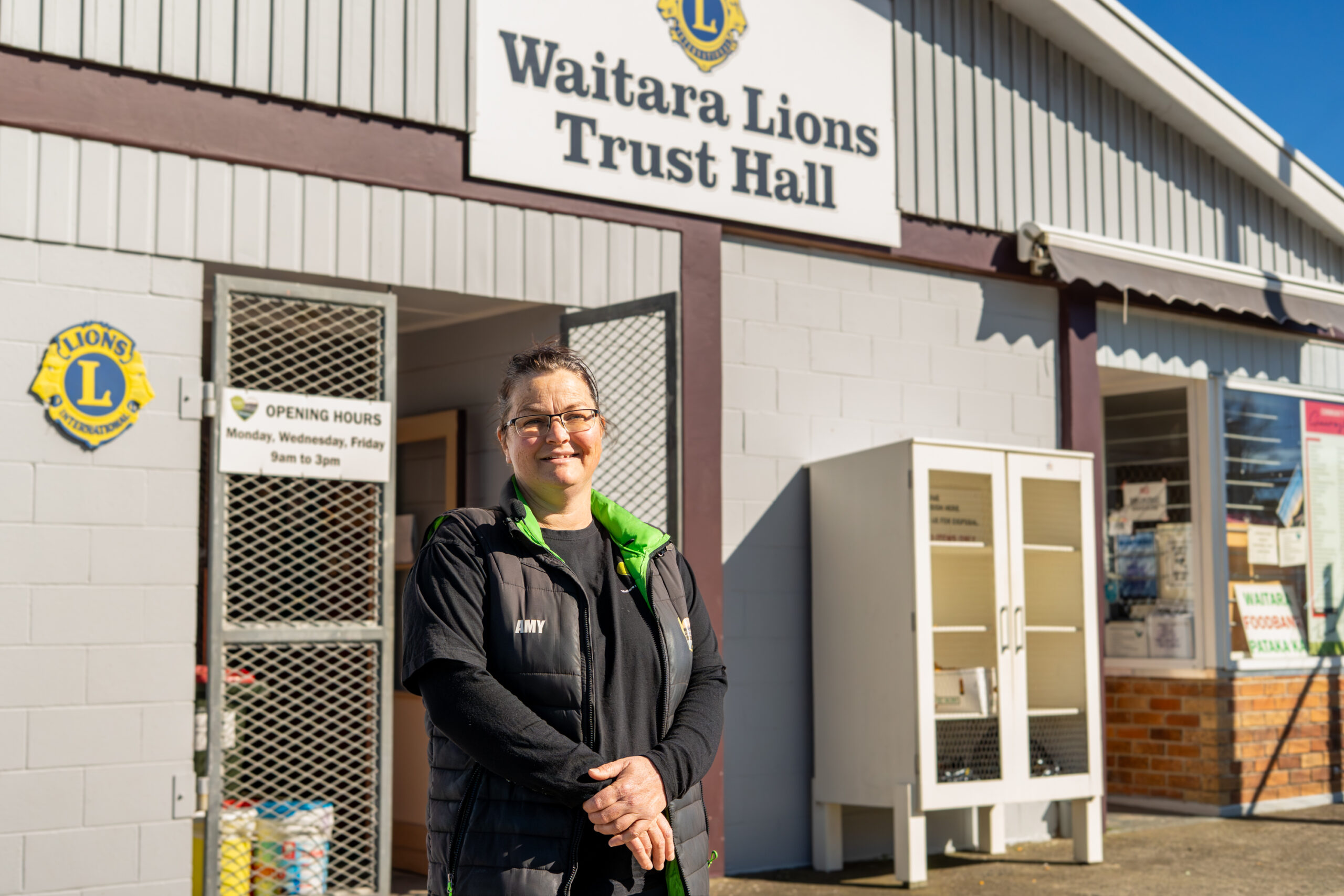
Every morning, often before the volunteers even arrive, Amy is already in the kitchen. As General Manager of the food bank, she keeps everything running. As a trained chef, she makes sure everyone is fed. Whatever came in as excess vegetables or produce Amy and the volunteers have brought in from home, she makes something good. A warm and nourishing meal, ready for the volunteers to sit down together and share at lunchtime. On the day we visited, it was a homemade chicken and vegetable soup. Whatever is not eaten gets packed into individual takeaway containers and frozen, ready to hand straight to a client who needs a hot meal, right then and there, no questions asked.
A Well-Oiled Machine
Three paid staff. That is all. And yet, three days a week, Monday, Wednesday, and Friday, around 120 to 130 kai parcels go out the door to those living in Waitara and the surrounding areas. On Fridays alone, 60 to 70 parcels are packed and given out. Each one filled with fruit, vegetables, canned food, toilet paper, a baking bag, a meal kit, and more. Just as quick as the food comes in, it goes out.
Supported by a remarkable band of volunteers, many of whom give their time across multiple volunteer roles, this is a well-oiled machine. Everyone has their station. Chopping vegetables on a big guillotine, assembling boxes, decanting milo, dish liquid and flour into smaller packages, managing deliveries, cracking jokes. There is a real joy in witnessing it.
Sitting alongside those volunteers, you quickly learn that each of them carries their own story too. One woman mentioned quietly that her son had recently brought home six people experiencing homelessness, who were now staying with her family. We overheard Amy check in with her, warmly and without fuss, asking whether she had enough firewood at home. That kind of care, woven so naturally into the morning, is not incidental. It is simply how things are done here.
That care extends to everything, including what goes out the door.
The parcels are more than a bag of food. Each one is assembled around a meal card. “Here is what you have, here is what you could make with it,” Amy said. “It is about empowering people to cook.
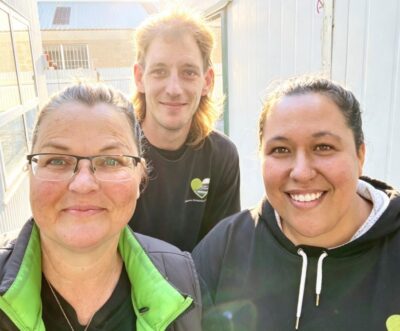
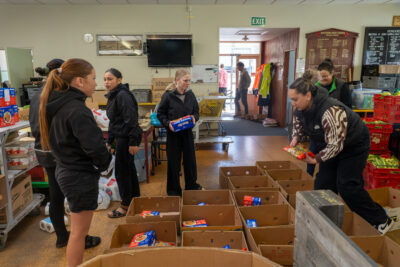
Image on the left: Amy, Aaron and Ally, the Foodbank’s only three paid staff members. Image on the right: Student volunteers from Manukorihi Intermediate are among the many community members who regularly lend a hand.
They Are Seen. They Are Heard.
During our visit, a woman living in her car nearby came into the food bank. A coffee and a hot meal were ready for her. The interaction that followed was warm, unhurried, no sense that her presence was anything other than welcome.
Amy shared that those living in their vehicles often choose Waitara specifically. They are ‘staunch Waitara’. They are proud to be here. Many have dogs, for companionship, for safety.
Whānau often arrive feeling low. Sometimes hopeless. Often having had negative experiences with other services. But not here. Amy, Ally and Aron and the volunteers listen. They get to know people. They check in with genuine warmth, not just about food, but about firewood at home, about how someone’s week has been, about whether they are okay.
“Amy shared with us that during COVID, a young farming woman with a small baby had relied on the food bank during one of the hardest stretches of her life. When things finally turned around, she came back, her car loaded with exactly the items the team had called out for on Facebook. “She took everything we needed and doubled it.”
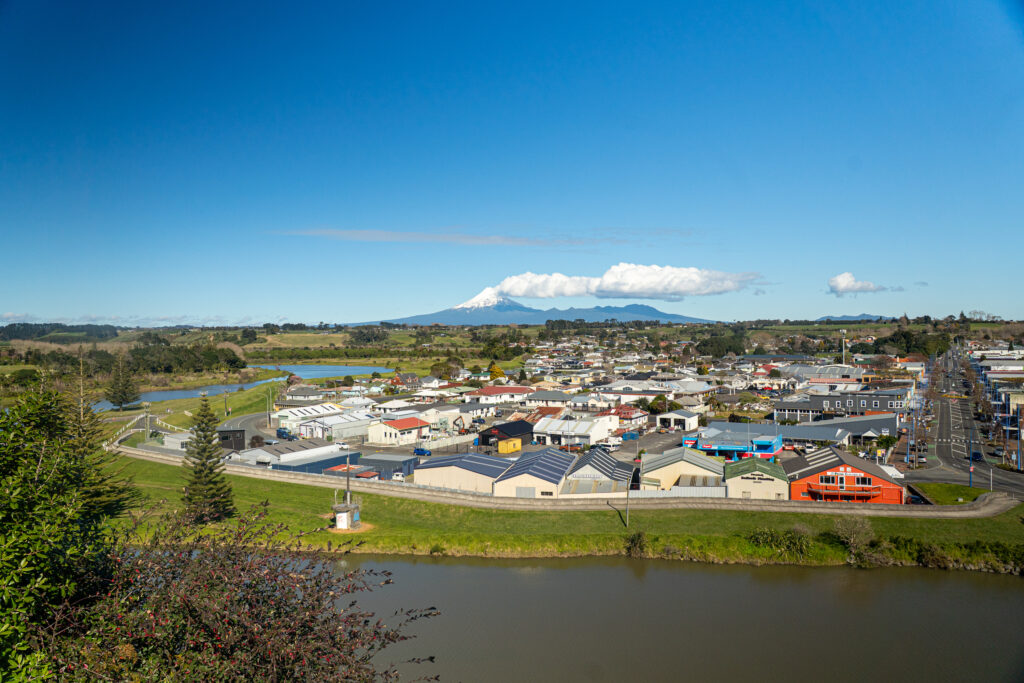
The Waitara community. A place its people are proud to call home, and one that those at the Foodbank know well and care deeply about.
Learning to Cook Scones for Your Daughter
The cooking classes Amy runs are, in her own words, an empowerment piece. Two widowed men, neither of whom had ever really cooked for themselves, their wives having always taken care of the kitchen, came to the classes together. Slowly, week by week, they built the confidence to make meals.
One of the men came to Amy with news one day.
“Tomorrow, do you know what I’m doing? My daughter is coming over and I’m making us some scones,” he shared.
The cooking classes are one part of a longer vision – breaking cycles of dependence, rebuilding practical skills, and helping whānau feel confident in their own kitchens again.
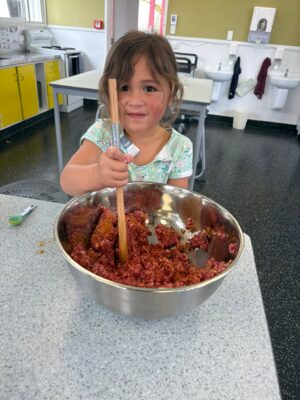
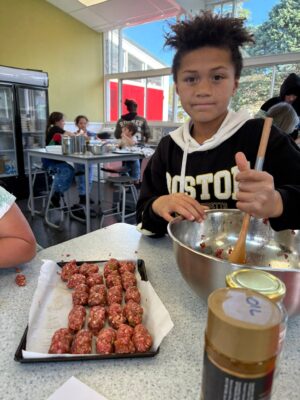
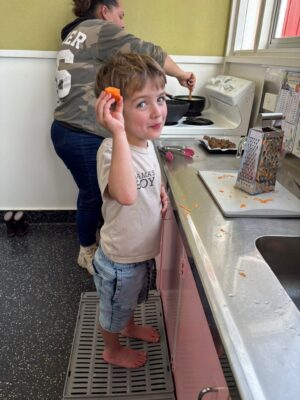
Images show tamariki enjoying hands-on cooking classes.
Growing Together – the Community Mara
On a section of land gifted by St John’s Church, a community garden has been created. But Amy is clear, it is less about the gardening and more about the gathering. It is a place to learn, connect and share skills. Volunteers run workshops. People who had never grown anything before have gone home and started vegetable gardens of their own. Amy also visits two local primary schools weekly, running gardening clubs, another way of growing those connections from the ground up.
Out the front of the food bank, a Pataka Kai stands as an open invitation. Food can be dropped off and taken, freely, by anyone in the community. No forms. No questions. Just a simple act of sharing.
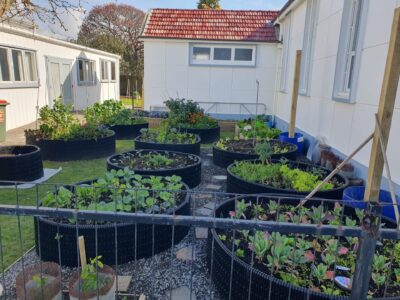
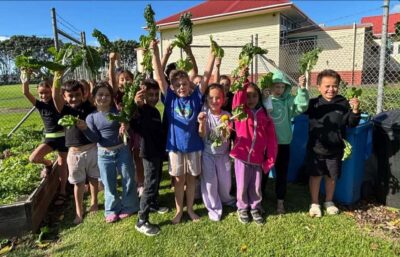
Image on the left: A community garden has been created in Waitara. Image on the right: Tamariki from Waitara East School taking part in the Garden Club run by Amy.
The Need Has Grown
The Waitara Food Bank does not exist in isolation. New research from NZ Food Network paints a broader picture. One in three New Zealand households experienced some form of food insecurity in the last year. Two-thirds say it happened for the first time within the last twelve months. And nearly half of those who need help say shame or embarrassment stops them from seeking it.
The demand at the Waitara Food Bank reflects this reality. Clients who once collected weekly can now only come around twice a month. For those who need more intensive support, the team can also arrange a short-term weekly parcel plan, helping people get back on their feet after a major event or trauma. It is not a one size fits all situation. The need has outgrown the supply.
Where We Fit In
As our region’s community foundation, our role is to connect generous donors with the causes and projects that need it most, and to provide the philanthropic infrastructure that helps those connections last.
In the case of the Waitara Food Bank, it is through Tindall Foundation and Connect Legal that we have been able to help. A modest grant over the last couple of years, enough to cover the power bill for an entire year.
There is more to do. Much more. But through showing up, through generosity, through communities that refuse to look away, places like this and people like Amy and Aly and their army of volunteers give us every reason to believe we can get there.
Nāu te rourou, nāku te rourou, ka ora ai te iwi
With your food basket and my food basket, the people will thrive.