
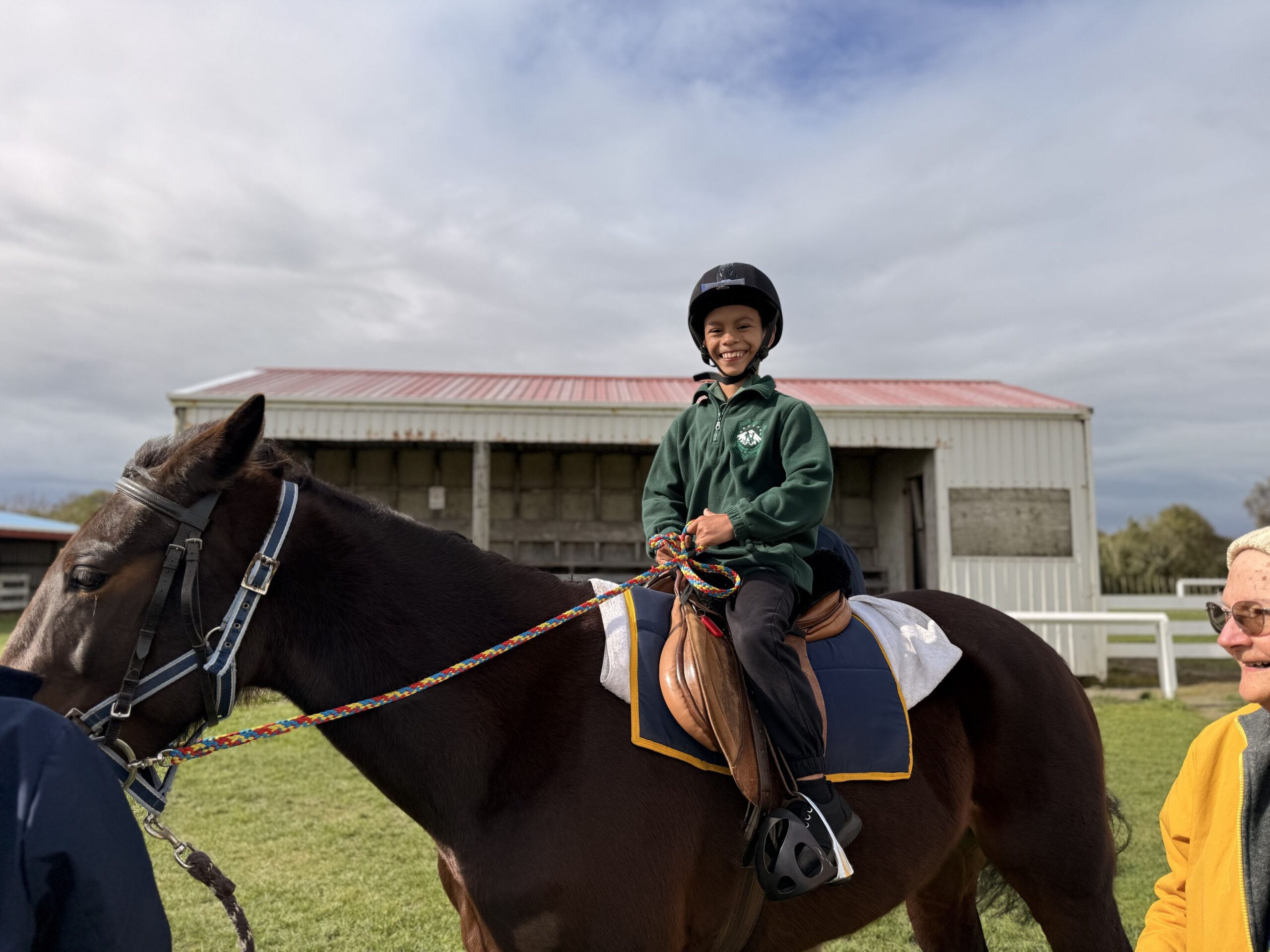
It’s not just pony rides in the paddock
31 August 2026For Hāwera Riding for the Disabled, the horses are only part of the story. For some of the people who come through its gates, the weekly sessions can build confidence, create connection and give them a reason to be somewhere they feel comfortable. A gift in a Will could help make sure that opportunity continues.
On a Wednesday morning in Hāwera, the horses are out and the volunteers are getting ready for another day at Hāwera Riding for the Disabled (RDA). It is a small organisation, run largely by volunteers, but what happens here can have a big impact. For some of the children who come to RDA, being around people can be difficult. Put them on a horse, and something changes.
“A lot of these children struggle with people. Put them on a horse and it’s a totally different scenario,” says Chris Oliver, who has been involved with Hāwera RDA for around 20 years and has been President for the past five.
Chris has watched children arrive nervous and unsure, then gradually become more confident and willing to take part.
“You have to be here with the kids when they first start and see what they achieve in the time they’re here. Some of them are probably here for one or two years and just the confidence they get from dealing with horses is amazing.”
For some children, the impact reaches well beyond the time they spend at RDA. Chris talks about children who struggle to engage with school and everyday life, but who are motivated to go into school on a Wednesday because they know they are coming to RDA.
“Some of them go to school, they only go to school for Wednesday because they’re coming here. That’s the difference this place makes in the lives of some of these children.”
It is a simple comment but says a lot about what RDA can mean to a child. It is not just about learning to ride. For some, having somewhere they want to be, something they look forward to and a place where they feel comfortable can make a difference well beyond their time on a horse.
And progress doesn’t always mean getting on the horse. There is one young girl at RDA who has been coming for around six months. When she first arrived, Chris says, she “just screamed the place down”. She was too nervous to get on a horse. Six months on, she still won’t ride. But she still turns up. The team has started getting her involved in grooming the horses, giving her another way to be around them and slowly build her confidence.
“The goal is to get her on a horse, whether we will achieve that, we don’t know,” Chris says.
For Chris, that is part of what makes the programme special. The children do not all progress in the same way or at the same pace. Some may only be there for a year or two. Some stay longer. Some achieve things that might seem small to someone looking in from the outside but are enormous steps for them.
And after 20 years of watching those changes, Chris still finds himself surprised by what he sees. “We’re lucky enough to follow some of these kids through. I just get blown away. I go home at night and, if I’m in a bad mood, I think, you know, God, what am I moaning about?”
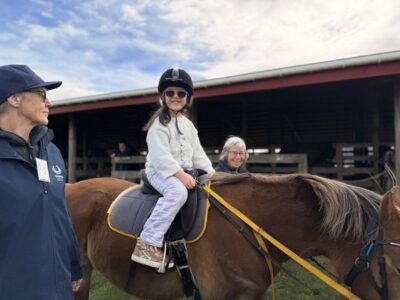
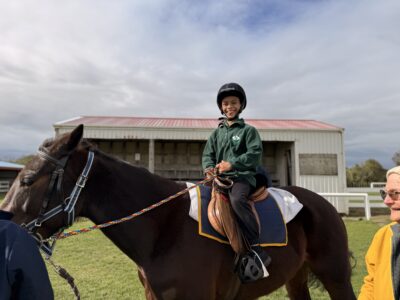
Photo left: Asra-Lee. Photo right: Sonny-Bill and a fellow RDA rider. Both attend RDA on Wednesdays.
It’s a small organisation doing a lot with very little
There are around 18 or 19 volunteers involved with Hāwera RDA, alongside one paid staff member. That paid role is held by coach Lisa Bartley, who Chris says is a huge part of what makes the programme possible. “Without Lisa we can’t operate as an RDA. She’s so good to work with and very passionate and gives so much of her own time.”
The programme runs each Wednesday, with many riders referred through local schools. The youngest rider Chris can remember is around four years old. The oldest has been in their seventies. Participants pay just $50 a term. “We try and keep that to the bare minimum so that no child misses out.”
Keeping fees low means the organisation relies heavily on fundraising, donations and funding applications to cover its costs. Chris estimates it costs around $30,000 a year to run Hāwera RDA.
“If it wasn’t for donations, we wouldn’t survive. Simple as that.”
A lot of work goes into finding that money.
“Every organisation you speak to, a large portion of their time is spent finding where the money is, because you’ve got to find it, then you’ve got to apply for it, and you might not get it all the time.”
For a small organisation like Hāwera RDA, knowing that someone has chosen to leave a gift in their Will can make a real difference. It gives the organisation something it rarely has when it comes to funding. Certainty about the future, and sometimes, even hope.
A bequest means knowing that, at some point, there will be money coming to support the organisation, without having to find it through another fundraising campaign or funding application.
“Having that sustainable source of income, knowing that it’s coming, without having to do an application, that would be a huge gift,” Chris says.
For an organisation that spends so much time finding the money to keep going, that certainty could free up time, reduce some of the pressure and help Hāwera RDA focus on what it does best. Being here for the people who need it.
But there is something else that keeps Hāwera RDA going too.
The people.
“It’s a group of people and we’ve all got the same ideas, if you like,” Chris says.
There is plenty of banter between the volunteers, too.
“Otherwise it won’t work.”
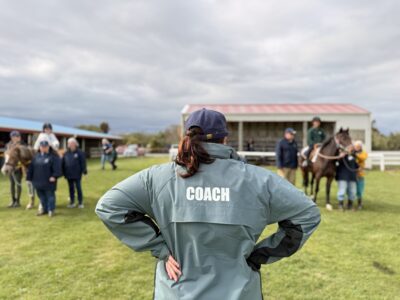
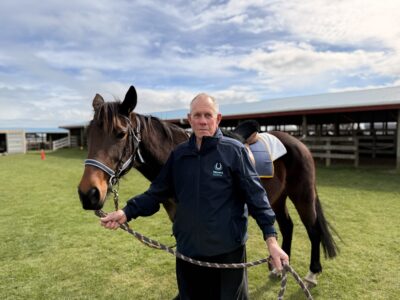
Photo left: Coach Lisa Bartley. Photo right: Chris Oliver.
A connection that started with giving
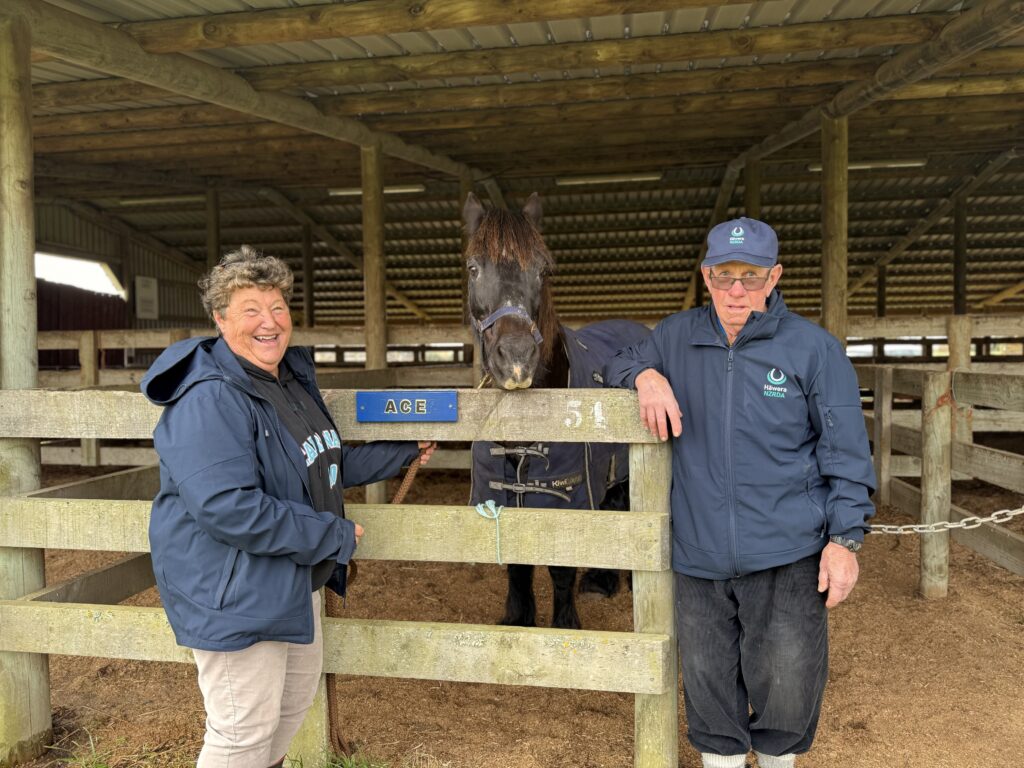
One of those people is Beverly Prankerd, also known as ‘Bev’. Bev has been involved with Hāwera RDA for many years, including serving as secretary-treasurer, and has seen first-hand what the organisation means to the people who come through its doors. She has also seen how much work goes into keeping a small community organisation running.
Her connection with giving began long before she decided to include RDA in her Will. Her mother, Gwen Muller, was a founding member and first life member of the Rotokare Scenic Reserve Trust. When Gwen died in 2016, she left a bequest to the sanctuary, helping fund a bush classroom. In November 2023, Bev attended a Taranaki Foundation donor event in Hāwera. It was there that Bev saw another way she could continue supporting the causes that matter to her. She has since chosen to leave a gift in her Will to Hāwera RDA through Taranaki Foundation. For Bev, it is a way of continuing to support an organisation she has already given years of her time and energy to.
“It wasn’t until I was involved in the administration part of RDA that I really learnt that finances are also a huge part of a voluntary organisation. Nothing beats a smile or a single word from one of our riders, but we also need to be financially stable to be able to offer these opportunities to our disabled riders. So that’s why I help out financially as well as physically,” says Bev. And for Chris, having people like Bev thinking about the organisation beyond the next funding round could make a huge difference.
What if there were more Bevs?
Taranaki Foundation Chief Executive Josh Hickford says Bev’s decision highlights the wider potential of gifts in Wills.
“A gift in a Will can be a way of continuing to support something you have cared about during your lifetime. If we had a number of Bevs in the community who left a small gift in their Will, what would that mean for our community? It would be huge, game-changing stuff.”
“For some people, that might be a significant gift. For others, it could be 10 per cent of their estate, with the remaining 90 per cent going to family. It does not have to mean choosing between family and the community.”
“Everyone’s circumstances are different, and family always comes first. But if many people each left something, even a modest gift can become transformational for the organisations receiving it.”
More than 45 minutes on a Wednesday
Chris is quick to point out that the RDA team only sees each child for a short time.
“We have them for 45 minutes,” he says. “The caregivers have them for 24-7.” That perspective stays with him. He sees the children, but he also sees the parents and caregivers who support them every day. He sees the volunteers who turn up each Wednesday. He sees the children who are nervous around people but find a different kind of connection with a horse. And he sees children grow.
That is perhaps the best way to understand Hāwera RDA. It is not a big organisation. It does not have a big budget or a large paid workforce. It is a group of people who believe in what they are doing, who keep the cost low so people can take part, and who keep finding ways to make Wednesday happen.
The horses are a big part of it. But they are not the whole story. For one child, it might be the confidence to get close enough to groom a horse. For another, it might be finding somewhere they want to come each week. For their family, it might be 45 minutes where their child is engaged, included and enjoying themselves.
And for someone like Bev, it is something worth supporting long after her own involvement comes to an end. A gift in a Will could help Hāwera RDA continue to be there for the next child who comes through the gate.
Because it’s not just pony rides in the paddock. It’s what those pony rides can make possible.